Department of Medical Social Sciences

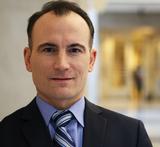
 David Cella, PhD


Professor and Chair
Department of Medical Social Sciences
Northwestern University Feinberg School of Medicine
633 N. Saint. Clair  St., 19th Fl.
Chicago, IL 60611
T: 312-503-1086
F: 312-503-9800
d-cella@northwestern.edu
Curriculum vitae

After graduating from Northwestern University with a B.S. in Psychology, he received a doctorate in clinical psychology from Loyola University of Chicago in 1984. From 1981-1984, he completed his pre-doctoral internship and a pre-doctoral fellowship at The New York Hospital-Cornell Medical Center. From 1984-1986, he completed a postdoctoral fellowship in Psycho-Oncology at Memorial Sloan-Kettering Cancer Center, where he conducted research on psychosocial aspects of cancer survivorship and on quality of life evaluation during cancer. In 1987, he became a Clinical Assistant Psychologist at Memorial Sloan-Kettering, at which point he moved to Chicago to direct psychosocial services and research in the cancer program at Rush-Presbyterian-St. Luke’s Medical Center.

From 1987-1997, Dr. Cella built a clinical service and research program with an emphasis on quality of life and outcome evaluation in cancer treatment research. His move to Northwestern University and Evanston Northwestern Healthcare in 1997 brought the expansion of his research in quality of life of chronic illness into a broader study of outcomes in health care. He has developed and is continually refining the Functional Assessment of Chronic Illness Therapy (FACIT) Measurement System for outcome evaluation in patients with chronic medical conditions.

Dr. Cella has several grants and contracts to study questions regarding quality of life measurement in clinical trials, cross-cultural equivalence of quality of life measurement, efficacy of psychosocial interventions in oncology, and medical outcomes research. He is principal investigator of the statistical coordinating center for the NIH Roadmap Initiative to build a Patient Reported Outcome Measurement Information System (PROMIS). He is also principal investigator of a contract to develop item banks for the clinical trials supported by the National Institute of Neurological Disorders and Stroke. He has over 500 publications in the area of quality of life measurement in clinical trials and clinical practice.

Selected Publications

Cella, D.F., Tulsky, D.S., Gray, G., Sarafian, B., Lloyd, S., Linn, E., Bonomi, A., Silberman, M., Yellen, S.B., Winicour, P., Brannon, J., Eckberg, K., Purl, S., Blendowski, C., Goodman, M., Barnicle, M., Stewart, I., McHale, M., Bonomi, P., Kaplan, E., Taylor, S., Thomas, C., & Harris, J. (1993).  The Functional Assessment of Cancer Therapy (FACT) Scale:  Development and validation of the general measure.  Journal of Clinical Oncology, 11, 3, 570-579.

Cella, D.F., Bonomi, A.E., Lloyd S.R., Tulsky, D.S., Kaplan, E., Bonomi, P. (1995). Reliability and validity of the Functional Assessment of Cancer Therapy - Lung (FACT-L) quality of life instrument.  Lung Cancer, 12, 199-220.

Gonin, R., Lloyd, S. & Cella, D.F. (1996).  Establishing equivalence between scaled measures of quality of life.  Quality of Life Research, 5, 20-26.

Cella, D.F., Hernandez, L., Bonomi, A.E., Corona, M., Vacquero, M., Shiomoto, G., & Baez, L.  (1998). Spanish language translation and initial validation of the Functional Assessment of Cancer Therapy (FACT) quality of life instrument.  Medical Care, 36(9), 1407-1418.

Cella, D., & Chang, C.-H. (2000). A discussion of item response theory (IRT) and its applications in health status assessment.  Medical Care, 38(9), II-66-72.

Cella, D., Eton, D.T., Fairclough, D.L., Bonomi, P., Heyes, A., Silberman, C., Wolf, M., and Johnson, D.H. (2002). What is clinically meaningful change (CMC) on the Functional Assessment of Cancer Therapy – Lung (FACT-L) questionnaire?  An analysis of data from ECOG 5592. Journal of Clinical Epidemiology, 55 (3), 286-295.

Cella, D., Hahn, E., & Dineen, K. (2002).  Meaningful change in cancer-specific quality of life scores: Differences between improvement and worsening. Quality of Life Research, 11 (3), 207-21.

McDermott, M.M., Hahn, E.A., Greenland, P., Cella, D., Ockene, J., Brogan, D., Pearce, Hirsch, A.T., Hanley, K., Odom, L., Khan, S., Criqui, M.H., Lipsky, M., Hudgens, S.  (2002). Atherosclerotic risk factor reduction in peripheral arterial disease: Results of a national physician survey. Journal of General Internal Medicine, 17, 895-903.

Cella, D., Zagari, M., Vandoros, C., Gagnon, D., Hurtz, H., Nortier, J.  (2002). Epoetin Alfa treatment results in clinically significant improvements in Quality of Life in Anemic Cancer patients when referenced to the general population.  Journal of Clinical Oncology, 21 (2) 366-373.

Lai, J-S., Cella, D., Chang, C-H., Bode, R., Heinemann, A.W. (2003).  Item Banking to improve, shorten and computerize self-reported fatigue: An illustration of steps to create a core item bank from the FACIT-Fatigue Scale.  Quality of Life Research, 12, 485-501.

Cella, D., Paul, D., Yount, S., Winn, R., Chang, C-H, Banik, D., Weeks, J.  (2003). What are the most important symptom targets when treating advanced cancer?  A survey of providers in the National Comprehensive Cancer Network (NCCN).  Cancer Investigation, 21 (4), 526-535.

Kris, M., Natale, R., Herbst, R., Lynch, T., Prager, D., Belani, C., Schiller, J., Kelly, K., Spiridonidis, H., Sandler, A., Albain, K., Cella, D., Wolf, M., Averbuch, S., Ochs, J., Kay, A.  (2003).  Efficacy of gefitinib, an inhibitor of the epidermal growth factor receptor tyrosine kinase, in symptomatic patients with non-small cell lung cancer. Journal of the American Medical Association, 290 (16), 2149-2158.

Cella, D., Yount, S., Sorensen, M., Chartash, E., Sengupta, N., Grober, J. (2005) Validation of the Functional Assessment of Chronic Illness Therapy Fatigue Scale Relative to Other Instrumentation in Patients with Rheumatoid Arthritis. Journal of Rheumatology, 32 (5), 811-819.

Brucker, P., Yost, K., Cashy, J., Webster, K., Cella, D. (2005)  General population and cancer patient norms for the Functional Assessment of Cancer Therapy – General (FACT-G). Evaluation & the Health Professions, 28 (2), 192-211.

Eremenco, S., Arnold, B., Cella, D. (2005) A comprehensive method for the translation and cross-cultural validation of health status questionnaires. Evaluation & the Health Professions, 28 (2), 212-232.

Cella, D. (2006) The FDA and the person with cancer: Give PRO’s a chance. Oncology, 20 (4), 436.

Cella, D., Fallowfield, L., Barker, P., Cuzick, J., Locker, G., Howell, A. (2006) Quality of life of postmenopausal women in the ATAC trial after completion of 5 year’s adjuvant treatment for early breast cancer. Breast Cancer Research and Treatment, 100 (3), 273-284.

Lai, J-S., Crane, P., Cella, D. (2006) Factor analysis techniques for assessing sufficient unidimensionality of cancer related fatigue.  Quality of Life Research, 15, 1179-1190.

Reeve, B., Hays, R., Bjorner, J., Cook, K., Crane, P., Teresi, J., Thissen, D., Revicki, D., Weiss, D., Hambleton, R., Liu, H., Gershon, R., Reise, S., Cella, D. (2007) Psychometric evaluation and calibration of health-related quality of life items banks: Plans for the Patient-Reported Outcome Measurement Information System (PROMIS). Medical Care, 45 (5), S22-S31.

Cella, D., Yount, S., Rothrock, N., Gershon, R., Cook, K., Reeve, B., Ader, D., Fries, J., Bruce, B., Rose, M. (2007) The Patient-Reported Outcomes Measurement Information System (PROMIS): Progress of an NIH Roadmap Cooperative Group During its First Two Years. Medical Care, 45 (5), S3_S11.

Cella, D., Gershon, R., Lai, J-S., Choi, S.(2007) The future of outcomes measurement: item banking, tailored short-forms and computerized adaptive assessment. Quality of Life Research, 16 (S1), 133-141.

Rosenbloom, S., Victorson, D.,Hahn, E., Peterman, A., Cella, D. (2007) Assessment is not enough: A randomized controlled trial of the effects of HRQL assessment on quality of life and satisfaction in oncology clinical practice. Psycho-Oncology, 16 (12), 1069-1079.

Butt, Z., Wagner, L., Beaumont, J., Paice, J., Peterman, A., Shevrin, D., Von Roenn, J., Carro, G., Straus, J., Muir, J., Cella, D. (2008) Use of a single item screening tool to detect clinically significant fatigue, pain, distress, and anorexia in ambulatory cancer practice. Journal of Pain and Symptom Management, 35 (1), 20-30.

Cella, D., Fallowfield, L. (2008) Recognition and management of treatment-related side effects for breast cancer patients receiving adjuvant endocrine therapy. Breast Cancer Research and Treatment, 107 (2), 167-80.

Butt, Z., Rosenbloom, S., Abernethy, A., Beaumont, J., Paul, D., Hampton, D., Jacobsen, P, Syrjala, K., Von Roenn, J., & Cella, D. (2008). Fatigue is the most important symptom for advanced cancer patients who have had chemotherapy. Journal of the National Comprehensive Cancer Network, 6 (5), 448-455.

Hahn, E., Rao, D., Cella, D., Choi, S.W. (2008) Comparability of interview and self-administration of the functional assessment of cancer therapy – general (FACT-G) - in English and Spanish speaking ambulatory cancer patients.  Medical Care, 46 (4), 423-431. PMC Journal in process

Cella, D., Li, J., Cappelleri, J., Bushmakin, A., Charbonneau, C., Kim, S., Chen, I., Motzer, R. (2008) Quality of life in patients with metastatic renal cell carcinoma treated with sunitinib versus interferon-alfa: results from a phase III randomized trial.  Journal of Clinical Oncology, 26 (22), 3763-3768.

Davis, K., Lai, J-S., Hahn, E., Cella, D. (2008) Conducting routine fatigue assessments for use in clinical oncology practice: patient and provider perspectives. Supportive Care in Cancer, 16 (4), 379-386.

Cuzick, J., Sestak, I., Cella, D., Fallowfield, L. on behalf of the ATAC Trialists’ Group. (2008) Treatment emergent endocrine symptoms and the risk of breast cancer recurrence – Results from the ATAC trial. Lancet Oncology, 9 (12), 1143-1148.

Lai, J-S., Cook, K., Stone, A., Beaumont, J., Cella, D. (2009) Classical testing theory and item response theory/Rasch model to assess difference between patient-reported fatigue using seven-day and four-week recall periods.  Journal of Clinical Epidemiology, 62 (9), 991-997. PMID: 19216054.

Revicki, D., Kawata, A., Harnam, N., Chen, W-H., Hays, R., Cella, D.  (2009) Predicting EuroQol (eq-5d) scores from the patient-reported outcomes measurement information system (PROMIS) global items and domain item banks in a United States sample. Quality of Life Research, 18 (6), 783-791. PMID: 19472072.

Hays, R., Bjorner, J., Revicki, D., Spritzer, K., Cella, D. (2009) Development of physical and mental health summary scores from the patient reported outcomes measurement information system (PROMIS) global items. Quality of Life Research, 18 (7), 873–880. PMID: 19543809.

Northwestern University home page

This page last updated 

March 29, 2013
Feinberg School of Medicine home page


Department of Medical Social Sciences

Northwestern University Feinberg School of Medicine
633 N. Saint Clair St. 19th Fl. , Chicago, IL 60611
T: 312-503-1725  -   F: 312-503-9800  -  mss@northwestern.edu

Northwestern Home | Calendar: Plan-It Purple | Sites A-Z | Search 
World Wide Web Disclaimer and University Policy Statements  © 2010 Northwestern University