Congratulations to Trainee of the Year Award Winner: Will Liem, PhD
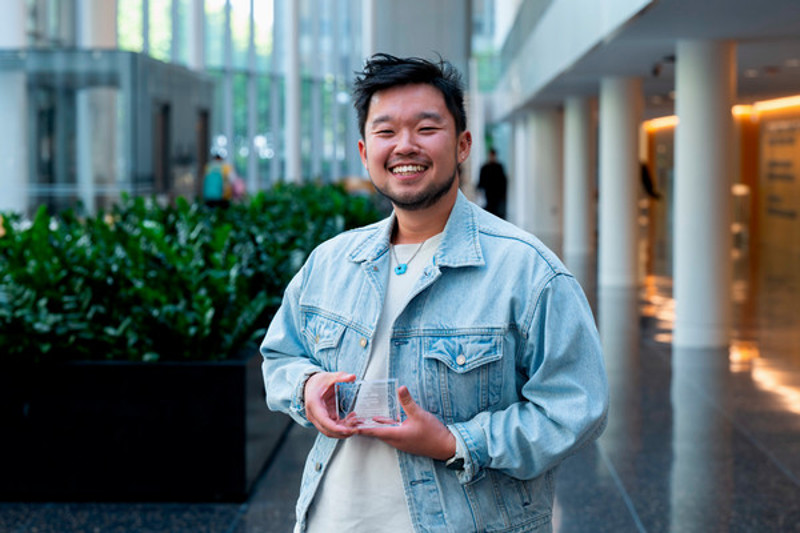
Pictured Above: Will Liem, PhD
What does receiving the Northwestern University Department of Medical Social Sciences Trainee of the Year award mean to you personally and professionally?
Receiving Trainee of the Year confirmed that putting my energy into the paths that matter to me is worth far more than chasing what others think I should be doing. In academic settings especially, it's easy to feel pressure to chase prestigious grants or publish in esteemed journals, and when you follow the beat of your own drum instead, it can stir up doubt about whether your intuition is leading you to the "right" place. This award is a vote of confidence that I have been on the "right path." The work I do out of care rather than obligation is work other people can see and value, too. Following the path that feels right to me and following the path that counts don't have to be at odds.
Can you share a moment or project from this past year that you’re especially proud of and why it stands out?
I had the chance to be interviewed as an expert for the first time, talking about my research. My qualitative, community-engaged work with LGBTQ+ teens complemented a recent national study about how teens use AI from the Rithm Project, a nonprofit focused on strengthening human connection in the era of AI. I felt especially proud because I got to speak as the kind of researcher I actually am, one who practices what I call the "science of caring." I talked about how the throughline beneath my data was a desire among queer teens to be loved and witnessed, both by the people close to them and by a society that so often erases who they are. So much of research is built to be translated into policy or some other technical fix, and that work matters. But this interview let me sit with a different question, one that asks what it means for research to change culture, or the way we relate to one another. That feels especially pressing right now, when the rise of AI is making it so easy to lose sight of what it means to be human. This was the first time I felt I conveyed the need for connection underneath my data, and I'm grateful I got to speak as a human when I'd been asked to speak as a researcher.
Colleagues often recognize people for how they support others. How would you describe your approach to working with and helping your team?
My research ethos is to build bridges that make knowledge matter. For me, that means investing in the relationships that put research into the hands of the people it's meant to serve. One of my strengths is the ability to connect and synthesize across the hearts, minds, and talents of the different people I work with, which has a way of sparking new collaborations and opportunities. People tend to realize they can do more by pooling what they each can bring than by working alone. As a human-centered designer, I care about caring. In practice, that means anticipating what people need before they have to ask, and being intentional about how a team grows together.
What motivates you in your day-to-day work, even during busy or challenging periods?
Maybe it's the social worker in me, but the thread running through all of these answers is a question about what it means to be human. That's what motivates me day to day: humanity! I grew up in San Francisco and worked in big tech, and I've watched the culture of my hometown get swallowed by the "AI-ification" of everything. So, I keep coming back to what it means to be human, and how we hold onto connection while protecting ourselves from the growing waves of technofascism. When things get busy or hard, I remind myself that what matters isn't the papers I publish or the grants I land, but how I carry myself along the way. It comes back to building bridges that make knowledge matter. Research is only as important as the dials it gets to move, and as long as I keep building the momentum to turn research into real change by investing in relationships with community partners and youth, I'm doing what I set out to do.
Looking ahead, what are you excited about for your team, department, or future work?
Fortunately for me, I'm sticking around MSS for another two years as a T32 postdoctoral scholar at the Impact Institute, working with Dr. Kathryn Macapagal's Teen Health Lab. I'm so excited to grow as both a leader and a researcher in the space where queer health and AI meet. I've always thrived on collapsing silos and building new connections, so I'm especially motivated to keep strengthening the ties between nonprofits and academia. I'm also the Director of Research at the All Tomorrows Institute, a nonprofit using research and creative storytelling to build more imaginative and equitable tech futures. My brain is already tickling at how we might use that mix of research and storytelling to shift the story we tell about technology toward something more hopeful, and to open up real space for people to act on it.