Welcome to Terry Horton, PhD, Research Associate Professor
June 17, 2026
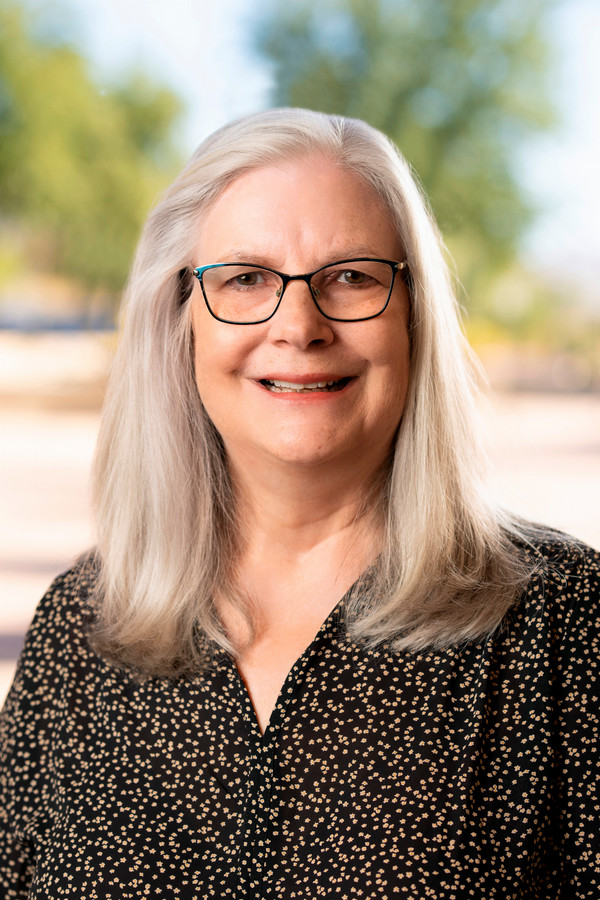
Pictured Above: Terry Horton, PhD
We are thrilled to welcome Terry Horton, PhD, who joins the faculty of Northwestern University Department of Medical Social Sciences (MSS) as a Research Associate Professor in the Division of Determinants of Health.
Horton holds a PhD in Biology from the University of Utah. She has been an Associate Professor of Research at Northwestern University for many years. Most recently, she was a member of the Department of Anthropology where she was part of the Evolutionary & Ecological Approaches to Health and Development (E2HD) group.
Horton’s over-arching research interest is in the impact of the environment on development, health, and well-being. This interest is grounded in understanding the reciprocal relationships among living organisms and the physical world; a philosophy that has found a home in the emerging field of planetary health. Her early research focused on the mechanisms of circadian and seasonal rhythms and how they drive changes in behavior and physiology, enabling organisms to adapt to diurnal and seasonal changes. This led to her more recent work examining how connections with nature can foster better mental and physical health in humans. Currently, in collaboration with David Victorson, PhD, and colleagues at the University of Minnesota, she conducts research on the mechanisms by which the stress-reducing effects of physical activity and exposure to nature may ameliorate the symptoms of pre-diabetes.
Two major accomplishments she is most proud are her dissertation work and the founding the Nature, Culture, and Human Health Network. Horton’s dissertation and postdoctoral work was at the interface of physiology, ecology, and evolutionary biology. In the field of ecology, there is a long-standing discussion of multiyear population changes (i.e., “cycles”) of animals, especially lemmings and their close relatives, voles. Prior theories suggested there was rapid genetic selection taking place, even within a year, that altered rates of growth and reproduction of these small, seasonally polyestrous mammals. Horton’s dissertation research showed that these seasonal differences were not due to genetic changes, but because pregnant females were transmitting information about seasonal changes in daylength to their fetuses. Young born early in the breeding season, when daylengths were increasing, grew rapidly and matured early. However, in response to photoperiod-induced changes in melatonin secretion by their mothers, their siblings, born later in the summer as daylengths decreased, grew slowly and did not become sexually mature until the following spring. This was an early example of adaptive developmental plasticity in mammals. This was some of the earliest work to document that maternal transfer of environmental information could program growth and development in utero.
The second accomplishment she is most proud of is currently ongoing. That is the transition of her work from very reductionist research on mechanisms of neuroendocrine physiology to work that has a greater societal impact. This transition uses Horton’s knowledge of physiology, especially neuroendocrinology, to document how conserving nature and biodiversity contribute directly to human health and wellbeing. This led to the NIH/HLBI funded project “Effects of Walking in Greenspace and the Built Environment in Adults with Prediabetes: A Randomized Crossover Trial.” Renamed for public dissemination as “Walking Outdoors in Neighborhoods pre-Diabetes Environmental Research” (WONDER), this study examines the interaction between physical activity and environmental exposure on stress reduction and symptoms of pre-diabetes. She has also become much more engaged in public outreach and community engaged research, exploring the importance of equitable access to greenspace as a public health concern. In 2015 with colleagues from the Forest Preserves of Cook County, the Brushwood Center at Ryerson Woods, The Chicago Botanic Gardin, and the Department of Anthropology at NU Nature, Culture, and Human Health Network Horton founded the Nature, Culture, and Human Health Network to critically translate scientific evidence about the health-benefits of nature to a wider audience.
In her new role, Horton is most excited to bring this new area of research to MSS and to work more closely with colleagues who are familiar with doing complex modeling of socioecological factors on health and behavior. Welcome, Terry Horton!