SPONSORED RESEARCH: A Personalized, Peer-Driven Digital Health Intervention to Promote Endocrine Therapy Adherence in Young Adult Women With or at Risk for Breast Cancer
October 8, 2026
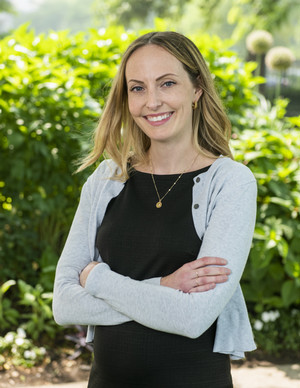
Above: Alex Psihogios, PhD
Read a Q&A Below
Alexandra Psihogios, PhD, and the team at Northwestern University’s Feinberg School of Medicine Department of Medical Social Sciences (MSS) received a grant from the Lynn Sage Breast Cancer Foundation titled: "A Personalized, Peer-Driven Digital Health Intervention to Promote Endocrine Therapy Adherence in Young Women With or At Risk for Breast Cancer.” Co-investigators include: Betina Yanez, PhD, Seema Khan, MD, and Zequn Sun, PhD.
What are the aims of the project?
Unfortunately, rates of breast cancer are rising in young adults (ages 18-39). Young adults treated for breast cancer are often asked to follow an endocrine therapy regimen for a long time (5-10 years) to maintain remission. In some cases, women who are at genetic risk for breast cancer may receive the same treatment. While effective, endocrine therapy is very burdensome and causes difficult side effects. Prior research shows that young adult women are more likely to discontinue endocrine therapy compared to older women.
To address this challenge, this study will adapt and combine two digital health interventions that we originally developed for teens/young adults with leukemia. The first is an app called “ADAPTS” that delivers daily surveys and adaptive self-management support to promote daily medication adherence. The second is social media messaging, made in collaboration with young adults with cancer and survivors who are prominent “social media cancer creators”. These messages leverage supportive, peer-generated content to promote medication adherence.
What are your next steps?
We are so excited to launch this project! First, we are excited to welcome a new study coordinator to our team – Olivia Sterling. To kick off the study, we will conduct focus groups with young adult women with or at risk for breast cancer. We will present the existing forms of our intervention and gather their feedback about what could be improved to be better aligned with their preferences and experiences. We also will continue to work closely with our Community Advisory Board of prominent cancer social media creators, including two breast cancer survivors, to develop new intervention content.
What do you hope will come out of this funded research?
I hope we can create an intervention that feels relevant and helpful to this population. I am especially excited to learn more about what they want and need from a digital health intervention and whether combining our app with social media support is a good approach. I am also really looking forward to collaborating with the Lynn Sage Breast Cancer Foundation and learning from their expertise and commitment to supporting young women affected by breast cancer. In the long-term, if we help young people stay on track with endocrine therapy and more supported in their experience, that would be a tremendous win!